
Specialty Chemicals for Packaging Industry: A Guide to Sustainable Barrier Coatings & Adhesive Resins
Where to buy specialty chemicals for packaging industry: sustainable barrier coatings, adhesive resins and green chemistry solutions for flexible film, paperboard and rigid containers.
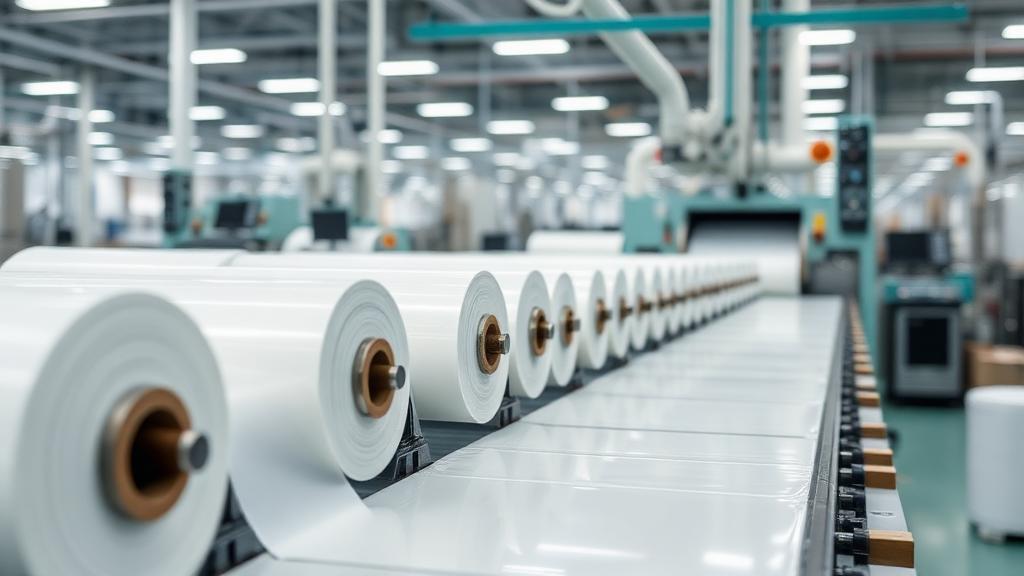
Packaging engineers and procurement teams searching for where to buy specialty chemicals for packaging industry are facing a dual mandate: deliver high-performance barrier and adhesion properties while meeting aggressive sustainability targets. This guide maps the chemical landscape for flexible film, paperboard and rigid container applications, with a focus on materials that align with the 12 Principles of Green Chemistry and emerging EPR legislation.
Why barrier coatings matter now
Oxygen and moisture transmission rates have become specification gatekeepers. A snack brand migrating to mono-material polyethylene needs a coating that replaces the EVOH or aluminium layer without sacrificing shelf life. Water-based, bio-derived barrier coatings — typically polysaccharide or protein-based systems cross-linked with food-safe aldehydes — are now achieving 0.5–1.5 g/m²/day WVTR on PET and OPP films, within striking distance of conventional multi-layer structures.
Our technical team has evaluated more than 40 barrier-coating chemistries across three continents. The resins showing the most consistent scale-up performance are:
- Algae-derived polysaccharide blends — excellent grease resistance for fast-food paperboard; home-compostable certified under ASTM D6400.
- Polyvinyl alcohol (PVOH) copolymers — high clarity, good oxygen barrier, soluble in cold water for detergent pod over-wraps.
- Ethylene vinyl alcohol (EVOH) dispersions — still the benchmark for ultra-high barrier, but increasingly sourced from post-industrial recycled content streams.
- Bio-polyester heat-seal coatings — drop-in replacements for conventional LDPE extrusion layers in form-fill-seal lines.
Adhesive resins: bonding performance and recyclability
Lamination adhesives are the invisible failure point in sustainable packaging. A multi-layer pouch designed for store-drop-off recycling can be rejected at the sorting plant if the adhesive layer contaminates the regrind. Solvent-free polyurethane and hot-melt polyolefin adhesives are the two growth categories we are tracking.
Solvent-free 2K PUR systems now achieve bond strengths above 4 N/15 mm on untreated OPP-to-PE structures, with pot lives extended to 35 minutes for high-speed laminators. The absence of acetate or MEK in the formulation eliminates VOC abatement capex and simplifies workplace safety compliance.
Hot-melt PO adhesives (metallocene-catalysed polyolefins) are displacing conventional EVA-based hot melts in paperboard tray sealing and wrap-around label applications. They offer lower application temperature (110–130 °C vs 160 °C), which reduces energy use and minimizes heat stress on heat-sensitive barrier coatings.
Sourcing strategy: what buyers should verify
When evaluating a specialty chemicals supplier for packaging applications, the technical data sheet is only half the story. Our account managers recommend buyers audit the following before committing to a qualification batch:
- Regulatory dossier depth. Confirm REACH registration numbers, FDA 21 CFR 175.105 compliance for indirect food contact, and EU 10/2011 migration testing data.
- Recyclability certifications. Look for cyclos-HTP or Interseroh approval, particularly if the packaging carries a "recyclable" consumer claim.
- Carbon intensity documentation. Request Scope 3 estimates or ISO 14040-compliant LCA summaries — major FMCG brands now require this for tier-one suppliers.
- Batch-to-batch viscosity stability. Barrier coatings and adhesives are shear-sensitive; a 10% batch viscosity drift can shut down a gravure coater for half a shift.
Green chemistry alignment
American Industrial Chemicals Inc screens every packaging-grade product against the 12 Principles of Green Chemistry. Our preferred barrier-coating and adhesive platforms score well on atom economy (Principle 2), renewable feedstock use (Principle 7) and inherent safety (Principle 3). Where bio-based raw materials are not yet technically viable, we prioritise suppliers running on certified renewable electricity and closed-loop solvent recovery.
Talk to our team
Need a barrier-coating or adhesive resin matched to your substrate, line speed and end-of-life requirements? Contact our packaging specialists and we will coordinate a trial batch, provide a full regulatory dossier, and model total cost of ownership against your incumbent chemistry.
Frequently asked questions
›Where can I buy specialty chemicals for the packaging industry?
American Industrial Chemicals Inc supplies barrier coatings, adhesive resins, plasticizers and processing aids for flexible film, paperboard and rigid packaging converters across North America and EMEA. Contact our packaging team for a qualification batch, regulatory dossier and total-cost-of-ownership model.
›Which barrier coatings replace EVOH or aluminium layers in mono-material packaging?
Water-based polyvinyl alcohol (PVOH) copolymers, algae-derived polysaccharide blends and bio-polyester heat-seal coatings can reach 0.5–1.5 g/m²/day WVTR on PET and OPP films — close to conventional multi-layer structures while keeping the package recyclable in mono-PE or mono-PP streams.
›Are solvent-free 2K polyurethane adhesives suitable for high-speed laminators?
Yes. Modern solvent-free 2K PUR systems deliver bond strengths above 4 N/15 mm on untreated OPP-to-PE structures with pot lives up to 35 minutes, eliminating VOC abatement capex while supporting line speeds typical of gravure and flexo laminators.
›What certifications should packaging chemical suppliers provide?
Request REACH registration numbers, FDA 21 CFR 175.105 compliance for indirect food contact, EU 10/2011 migration testing, recyclability approval (cyclos-HTP or Interseroh) and an ISO 14040-compliant LCA summary covering Scope 3 emissions.
›How do bio-based barrier coatings align with green chemistry?
They score well on the 12 Principles of Green Chemistry — particularly atom economy, renewable feedstock use and inherent safety — and typically reduce cradle-to-gate carbon intensity by 30–60% versus petrochemical equivalents when paired with certified renewable electricity.